
Why US Cafés Are Ditching Plastic Tableware — and What They're Switching To
Walk into a specialty coffee shop in Seattle, Portland, Austin or Brooklyn these days and you'll notice something: the plastic is disappearing from the table. Not just the straws — the plates, the cups, the kids' dishes, the tasting spoons. This isn't a fashion trend. It's the collision of three forces — tightening local rules, changing customer expectations, and a simple cost equation that finally flipped. Here's what's actually driving the shift, and why reusable rice husk (plant fiber) tableware is becoming the quiet favorite of café owners who did the math.
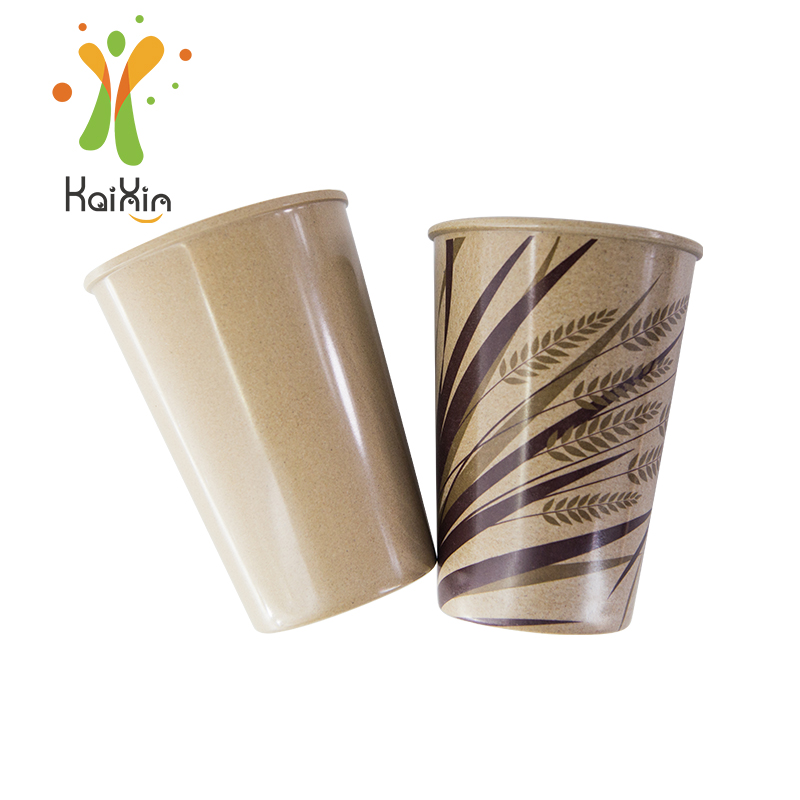
The reusable rice husk cup — built for daily café service, hot drinks and custom branding.
The Rules Are Getting Tighter — City by City
There's no single federal law banning plastic tableware in American restaurants. Instead, the change is happening in waves at the state and city level — and that patchwork is exactly why it feels sudden. California, New Jersey, New York, Washington, Colorado and a growing list of cities have restricted single-use plastic items like straws, stirrers and cutlery; several jurisdictions now only hand out disposable foodware on request. For a café with one location, adapting is a nuisance. For a chain or a franchise, it's a supply-chain decision: do you manage ten different compliance rulebooks, or do you simply switch to drinkware and dishware that no regulation targets? That's the question more US food-service operators are answering with the second option — and once a chain switches, its suppliers feel it down the line, all the way to the factory floor.
Customers Notice the Cup Before the Coffee
Coffee is an emotional purchase, and the vessel it comes in is part of the product. A cracked, stained plastic tumbler quietly tells your customer something different than a matte, natural-fiber cup with your logo embossed on the side. Café owners we talk to describe the same moment: they switched one product line — usually the dine-in cups — to a natural fiber material, and customers started asking about it. The tableware became a conversation piece, then a photo piece, then part of the brand story on Instagram. In a market where "sustainably sourced" appears on everything from oat milk to napkins, reusable plant fiber tableware is one of the few changes that customers can see, hold and feel with every visit. That visibility is why the switch pays for itself in ways a spreadsheet doesn't capture.
"Compostable" Isn't the Only Answer — Reusable Is the Other Path
Here's a distinction that matters if you supply or run food service. Most of the eco tableware you see in American cafés is disposable-but-compostable: molded fiber plates and PLA-lined cups designed to be thrown away after one use. It solves the material problem but not the volume problem — a busy café still generates bags of waste every day, and true composting requires facilities many cities don't have. The other path is reusable tableware: durable cups, bowls and plates that get washed and return to service thousands of times. Rice husk (plant fiber) tableware sits in this second category, and it's built for exactly the conditions of café service — hot espresso drinks, boiling water, repeated washing, and the daily knocks of a busy counter. For dine-in service, reusable is the endgame: no waste stream, no per-unit consumable cost, no compliance headaches. For takeaway, many cafés pair reusable dine-in ware with improved disposable packaging — a hybrid that's becoming the de facto standard.
The Cost Math Finally Flipped
The old argument for plastic was price. That argument is getting weaker every year. Single-use items are a permanent, rising operating cost — you buy them again every week, forever, and their prices track resin and freight markets. A reusable rice husk cup or plate is a one-time capital item: it costs more than a disposable unit, but it returns to service for years. Run the per-use numbers over even one year of daily service and the reusable option wins in most high-volume settings — before you count the waste-hauling fees it removes. Add a third factor and the case closes: custom branding. When the cup itself is your brand ambassador — logo molded or printed, colors matched to your shop — you're not just buying dishware, you're buying merch that customers use in your store every day.
Why Rice Husk Specifically?
Café owners evaluating reusable materials usually compare ceramic, stainless steel, bamboo and plant fiber. Ceramic breaks; steel feels commercial and shows dents; bamboo fiber products often contain binding agents buyers should ask about. Rice husk tableware has a specific story: it starts as an agricultural byproduct — the hull left over after rice milling — that gets ground and molded under heat and pressure into a dense, durable composite. No BPA, no plastic, lightweight enough for staff to clear tables quickly, and warm to the touch in a way that suits coffee service. It's also one of the few materials that handles both ends of the café menu: hot drinks and iced drinks, without sweating or cracking. If you want the full material breakdown, our complete rice husk tableware buyer's guide covers what it's made of and how it's tested.
How Cafés Actually Make the Switch
Every successful switch we've seen follows the same three-step pattern. First, pilot one product line — usually the dine-in cup, because it's the most visible and the most used. Second, run it through real service: a month of real washing in your own setup, hot drinks, and staff handling tells you more than any spec sheet. Third, brand it — once the material proves itself, add your logo and brand colors so the tableware starts working for your marketing. For distributors and dealers supplying café chains, the same logic applies at container scale: start with one SKU, verify durability in the field, then expand the program. Our rice husk coffee cups support custom logo and Pantone color matching for exactly this reason, and our full product range covers the rest of the table — bowls, plates, trays and kids' sets — so a café can complete the transition in one order instead of five.
Quick Checklist: Planning Your First Reusable Order
✅ Start with dine-in cups or plates — highest visibility, fastest payback
✅ Test a sample kit through one month of service in your own wash setup
✅ Confirm food-contact test reports (ours come SGS tested)
✅ Decide branding: molded logo, printed logo, or Pantone color match
✅ Check the supplier's stock vs custom MOQ split before quoting
✅ Plan takeaway packaging separately — reusable works for dine-in first
Frequently Asked Questions
Are rice husk cups safe for hot coffee and espresso drinks?
Quality plant fiber tableware is designed for exactly this use — boiling water, hot espresso, repeated daily service. The key is sourcing from a manufacturer that controls the material blend and can document food-contact safety with real test reports, not just marketing claims. Ask any supplier for the actual migration test documents for the products you're buying; we ship ours with every quotation.
Can reusable tableware work for takeaway and delivery?
Reusables are strongest for dine-in, where the same cup returns to the counter. For takeaway, most US cafés keep disposable packaging but choose better materials — and some cities now support cup-return or deposit programs. A practical rollout is hybrid: reusable for everything served in-house, improved disposable for everything that leaves the store.
What's the MOQ for custom-branded rice husk cups?
It depends on whether you order stock items or full custom production. Stock items ship from small pilot quantities, which is how most cafés and small chains start; full custom runs with molded logos and matched colors have clearly stated minimums. A good supplier separates these two tiers in writing — if you'd like our current structure, send us an inquiry and we'll reply with the full breakdown.
Switching your café or chain to reusable tableware?
Tell us your market, target products and quantities. We'll reply with a tailored quotation, our SGS food-contact reports and a sample proposal — custom logo and color options included from our 5,000 m² facility.
Send InquiryPublished by Kaixin Eco Team · Shenyang Kaixin Technology Co., Ltd. — eco-friendly rice husk (plant fiber) dinnerware manufacturer since 2016, shipping to 40+ countries with full OEM/ODM support. Going deeper: see 5 reasons food businesses are switching to rice husk tableware, explore our reusable coffee cups with custom branding, or start from the Kaixin eco tableware homepage.