Buyers ask for a factory video and get a stock clip of a different building. This page is the boring version instead: what equipment we run, what each stage does, how a lead time is actually calculated, and what you will see if you come and stand on the floor.
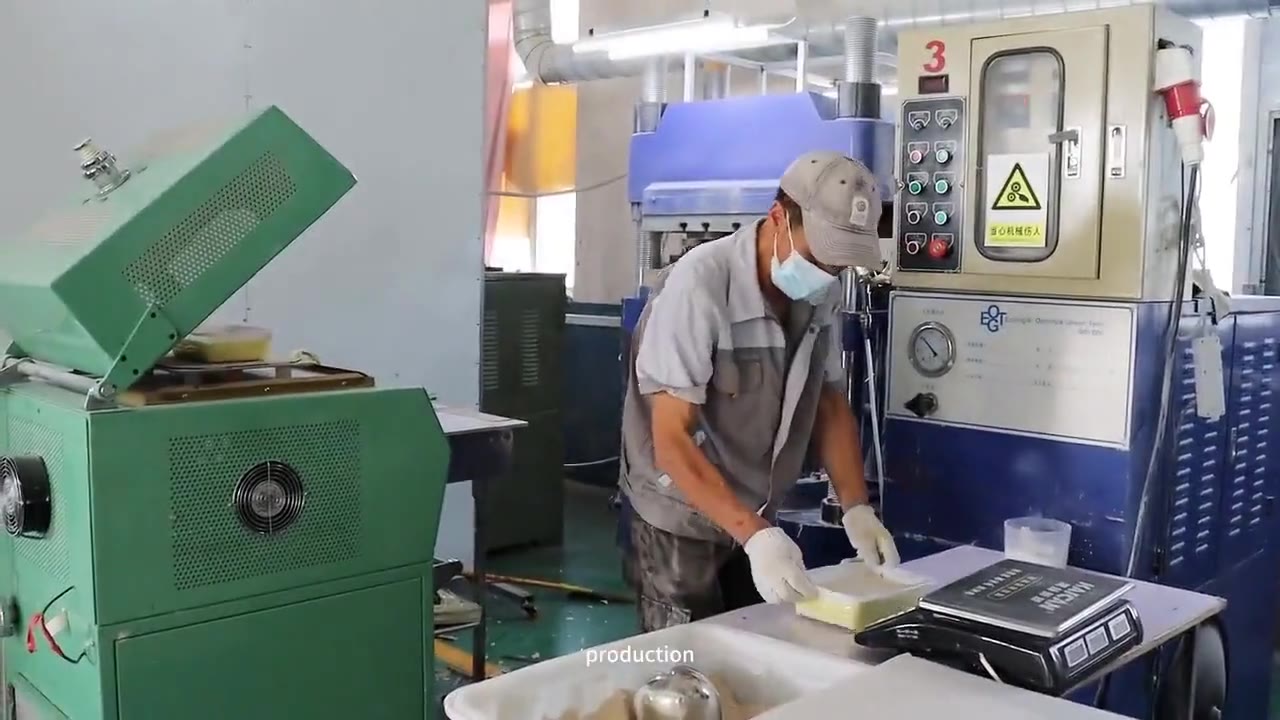
| Item | Detail |
|---|---|
| Location | Hunnan District, Shenyang, Liaoning, China |
| Founded | 2016 |
| Floor area | 5,000 m² — molding hall, finishing area, QC room, packing and finished-goods storage under one roof |
| Team | 50+ staff across pressing, finishing, quality and export documentation |
| Molding presses | 20+ high-temperature, high-pressure presses |
| Material | Rice husk fiber with a food-grade starch binder; no melamine, no BPA, no plastic resin |
| Range | Plates, bowls, trays, compartment plates, chopping boards, cups and tumblers, lunch boxes, kids' sets |
| Customization | Pantone colors, molded or printed logos, custom packaging, new-mold development |
| Typical lead time | 30–45 days after sample approval and deposit |
| Inspection | Third-party inspection accepted at any stage; SGS, BV, TÜV, Intertek or your own QC team |
Six stages. Each one is on this page because it changes something a buyer can see or measure in the finished product.
Rice husk arrives from mills in the rice-growing northeast and is checked for stone, sand and moisture. Wet husk is the fastest way to a brittle batch, so it is rejected before milling rather than dried and hoped for.
Husk is ground to a consistent fiber. Particle size decides how the surface reads after pressing — coarse fiber gives the visible speckle most buyers recognize as plant fiber.
Fiber is blended with a food-grade starch binder. The ratio is weighed per batch; it is the single variable that most affects strength, weight and how the piece behaves in service — the material guide explains what that means for temperature and washing.
High temperature and pressure form the piece in one cycle on one of the 20+ presses. Temperature and dwell time are set per SKU and logged, not adjusted by feel between runs.
Trimming, edge sanding and surface inspection. This is where a rim becomes comfortable to drink from and where flash gets caught before it reaches a carton.
Weight and dimension checks against the approved sample, drop and wash trials on the run, then packing with count, barcode and carton-drop verification, and loading photos before the container closes.
Rice husk is the shell left after milling. It is not grown for this purpose, it does not compete with food for land, and the alternative uses are limited — historically it was burned or left to rot. Pressing it into tableware keeps the material in service for years instead of one season.
We are specific about what that does and does not mean. It means the feedstock is a byproduct. It does not, on its own, make a product certified compostable, and we do not label it that way. What we will say is that the material is SGS tested for food contact, contains no melamine or BPA, and is built to be washed and reused rather than thrown away after one meal.
See the Testing PositionAnyone can promise a number. These are the four variables that actually move it.
| Variable | What it does to the date |
|---|---|
| Press allocation | 20+ presses are shared across the range. A large single-SKU order can hold one press for days; a mixed order spreads across several and moves faster per item. |
| Color changes | Every color change costs setup time. Four colors in one order is not four times one color — but it is not free either, and the quotation says so. |
| New tooling | A new mold adds drawing, tooling and trial pressing before production can start. We quote tooling separately so you can compare it against adapting an existing shape. |
| Season | Q3 and Q4 are the busiest months because our customers are stocking for Christmas and the southern-hemisphere summer. Orders placed in that window take longer than the same order in February. |
Chinese New Year is the other date to plan around. The plant slows for roughly two weeks around the holiday, and the weeks before it are the busiest of the year. For anything that must land in Q1 or early Q2, book production before mid-January. We would rather tell you this in October than explain it in December.
Fly into Shenyang Taoxian International Airport, or take the high-speed train from Beijing in about two and a half hours. Send dates in advance: the useful visit is a line walk-through, a look at the QC records and a sample review at the table, not a meeting room and a brochure. We will also show you the items we would not quote you for, which is usually the most informative part.
Appoint SGS, BV, TÜV, Intertek or a local agent. Give us three working days' notice, send the checklist and the AQL level, and we will have the lot staged when they arrive. The door, the batch records and the loading bay are open to whoever you send, so the report describes the plant you are actually buying from rather than a showroom.
| Question | Answer |
|---|---|
| Can we visit? | Yes, by appointment. Send your dates and we arrange the line walk-through, record review and a meeting with the production manager. |
| Lead time? | 30–45 days after sample approval and deposit for most items. Tooling, custom colors and peak-season volume add time, and the quotation reflects it. |
| How does Chinese New Year affect orders? | The plant slows for about two weeks around the holiday and the preceding weeks are the busiest of the year. For Q1 and early Q2 arrivals, book before mid-January. |
Item, quantity, destination and timeline. We will tell you what is realistic before you commit to a date.